
Choosing the right sound system can make or break a live event.
Whether you are hosting a corporate seminar, a wedding, or a high-energy concert, audio quality and system reliability are paramount. Consequently, the primary decision comes down to two options: Active vs Passive speakers.
Both types of speakers offer unique advantages depending on your technical expertise, venue size, and budget.
Understanding how these systems function will help you make the best decision for your upcoming event.
What Are Active Speakers?
Active speakers (also known as powered speakers) feature a built-in power amplifier. Because the internal amplifier is tuned specifically for the speaker‘s drivers, active speakers function as an all-in-one sound system.
Key Advantages of Active Speakers
- Simple Setup: Active speakers require fewer external components. You can connect an audio signal directly from a mixer, laptop, or phone without needing separate amplifier racks.
- Matched Amplification: The internal amplifier and speaker is optimized for the speaker’s efficiency.
Potential Drawbacks
- Heavier Weight: The internal amplifier adds weight to the cabinet, making individual units heavier to lift onto stands.
- Power Cable Requirements: Each active speaker requires an audio cable for signal transmission. A dedicated power cable for each speaker can complicate cable runs across large stages.
What Are Passive Speakers?
Passive speakers (unpowered speakers) rely on an external power amplifier to drive sound. They do not contain internal amplification. So audio signals and power are delivered through a single high-gauge speaker cable, such as a Speakon cable.
Key Advantages of Passive Speakers
- Lighter Cabinet Weight: Without an internal amplifier, passive speaker cabinets are noticeably lighter, making them easier to hang or hoist onto high trusses.
- Centralized System Control: All amplification, processing, and power connections stay centralized in an amp rack. As a result, sound engineers can adjust power levels from a single location.
- Easier Upgrades & Maintenance: If an amplifier fails, you can quickly swap out the external amp without replacing or repairing the speaker cabinet itself.
Potential Drawbacks
- Complex Rigging & Setup: You must carefully match speaker impedance (ohms) and wattage ratings with the external amplifier to avoid equipment damage.
- Bulkier Transport: Carrying separate amplifier racks, crossovers, and processing gear adds extra bulk to your equipment transport.
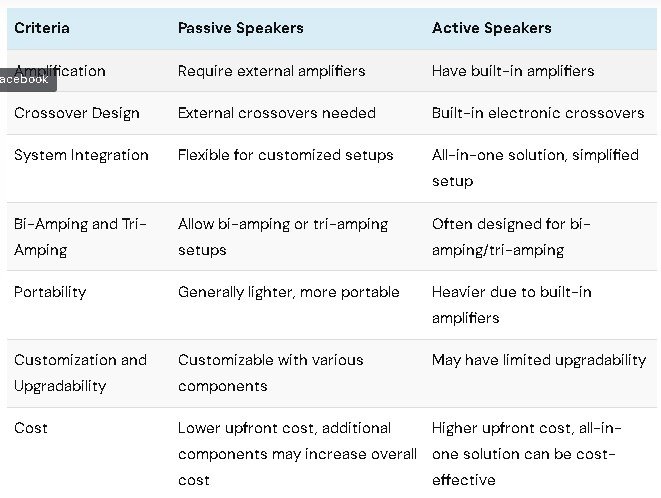
Which Speaker Type Is Better for Events?
To determine whether active or passive speakers suit your event best, consider your venue size, setup time, and technical skill level.
Choose Active Speakers If:
- You need fast, efficient setups: Mobile DJs, small corporate presenters, and wedding vendors benefit from simple plug-and-play functionality.
- You want minimal gear to transport: Powered speakers eliminate the need to haul heavy external amplifier racks.
- You prefer foolproof safety: Integrated limiters and DSP prevent accidental clipping and speaker burnout.
Choose Passive Speakers If:
- You manage large stages: Festival stages and large events with complex line-array setups benefit from centralized amplification and lighter hanging weights on trusses.
- You have a permanent venue installation: Fixed venues like auditoriums, houses of worship, or clubs often keep amplifiers secure in a server room while running clean speaker wires to passive enclosures.
- You have a dedicated audio crew: Experienced sound engineers prefer total manual control over crossover settings, gain staging, and amplifier selection.
Making the Final Decision
When evaluating Active vs Passive speakers for your events, neither system is inherently superior—they simply serve different operational needs. For most portable events, small-to-medium concerts, and mobile setups, active speakers offer unmatched convenience and clear sound quality with minimal hassle.
Conversely, passive systems deliver the flexibility and centralized control required for heavy-duty sound reinforcement in large-scale venues or permanent installations. Therefore, evaluate your venue demands, transport capabilities, and technical expertise before investing to ensure your audience experiences pristine audio every time.