
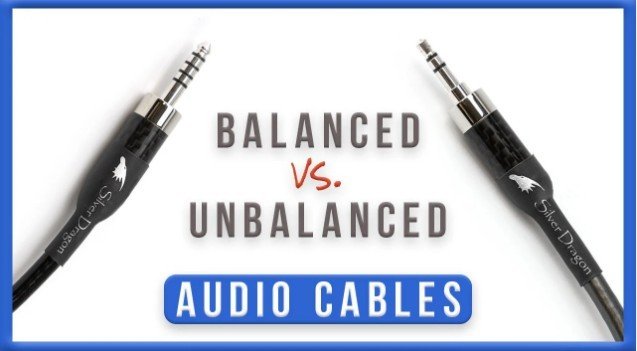
What’s the Real Difference?
If you’ve ever looked at the back of a mixer, studio monitor, or audio interface, you’ve probably noticed a dizzying array of jacks and cables. XLR, TRS, TS, RCA—it can get confusing quickly. However, all of these options fundamentally boil down to two categories: balanced and unbalanced audio cables.
Choosing the wrong one can introduce unwanted buzz, hiss, or signal degradation into your setup. Let’s break down exactly how they work, how they differ, and when you should use each.
1. Unbalanced Cables: Simple and Standard
An unbalanced cable is the most common type of audio cable. You use them every time you plug a guitar into an amp or connect a smartphone to an old stereo system.
How They Work
An unbalanced cable consists of two wires inside the sleeve:
The Signal Wire: Carries the actual audio signal.
The Ground/Shield Wire: Acts as the return point for the electrical circuit and helps shield the signal wire from outside interference.
Because the shield wire doubles as a return path for the audio, it can pick up outside electronic noise from power cables, wireless devices, and lighting dimmers.
Common Types of Unbalanced Cables
TS (Tip-Sleeve): Standard 1/4-inch guitar patch cables.
RCA: The red and white cables used for turntables, DJ gear, and home audio.
The Golden Rule for Unbalanced Cables: Keep them short. Because they are highly susceptible to picking up noise, you should never run an unbalanced cable longer than 15 to 20 feet (4.5 to 6 meters).
2. Balanced Cables: Built to Battle Noise
Balanced cables are engineered specifically to eliminate the hum and interference that plague unbalanced setups, making them the industry standard for professional recording and live sound.
How They Work
Instead of two wires, a balanced cable uses three wires:
Hot (Positive): Carries the original audio signal.
Cold (Negative): Carries a duplicate of the audio signal, but with its polarity completely reversed (flipped upside down).
Ground: Acts strictly as a shield against interference and does not carry the audio signal.
The Magic of “Common Mode Rejection”
When the audio travels down a balanced cable, both the Hot and Cold wires pick up the exact same background noise along the way.
When the signal reaches its destination (like your mixer or audio interface), the receiving device flips the polarity of the Cold signal back to normal. This does two things simultaneously:
It puts the original audio signals back in phase, making them louder and stronger.
It flips the background noise upside down, causing the noise on the Hot and Cold lines to perfectly cancel each other out.
This process is called Common Mode Rejection, and it delivers a crystal-clear, noise-free audio signal.
Common Types of Balanced Cables
XLR: Three-pin cables typically used for microphones.
TRS (Tip-Ring-Sleeve): Looks like a 1/4-inch guitar cable, but features an extra metal ring on the jack to accommodate the third wire.
Balanced vs. Unbalanced: A Quick Comparisn
Which One Should You Use?
Choose Balanced If:
You are running cables longer than 15 feet.
You are connecting microphones (mics output a very quiet signal that needs maximum protection from noise).
You are plugging into professional studio monitors or audio interfaces that support balanced connections.
You are routing cables near heavy power sources, wireless routers, or stage lighting.
Choose Unbalanced If:
You are plugging in an electric guitar, bass, or keyboard over a short distance.
Your gear only has RCA or standard TS inputs (using a balanced cable on unbalanced gear won’t make it balanced!).
You are connecting consumer electronics like home theater systems or older DJ setups.
Final Verdict
Understanding the difference between balanced and unbalanced cables is the easiest way to instantly improve your sound quality. Whenever your equipment allows for it, always opt for balanced connections to guarantee a pristine, noise-free audio experience.