
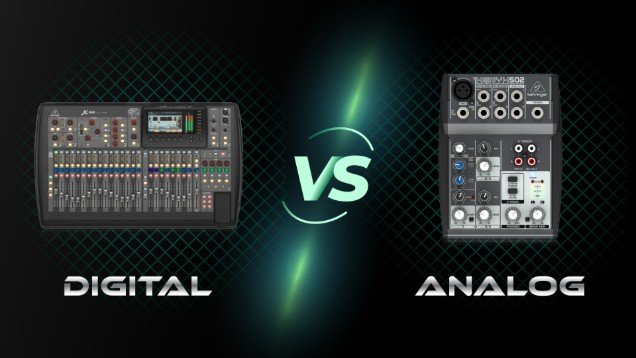
Choosing between a digital and an analog mixer is one of the oldest debates in live sound and recording. The right choice doesn’t depend on which one is “better” overall, but rather on how you work, your budget, and your specific venue or studio needs.
Here is a comprehensive breakdown to help you decide which one belongs in your setup.
1. Analog Mixers: The Classic, Hands-On Approach
Analog mixers process sound using continuous electrical signals. They are beloved for their simplicity and the immediate, tactile response they offer.
The Pros:
One Knob, One Function: Everything is laid out right in front of you. If you need to boost the treble on channel 3, you just grab the physical EQ knob on channel 3. There are no menus to menu-dive or tabs to switch.
Zero Latency: Because the signal flows purely through physical circuits, there is absolutely no digital processing delay.
The “Analog Warmth”: Many engineers prefer the natural harmonic distortion and musical “warmth” that high-quality analog preamps and circuits introduce when pushed.
Cost-Effective on entry level: For a small setup (like a solo acoustic act or a podcast), a small analog mixer is highly affordable and incredibly reliable.
The Cons:
Bulky Outer Gear Required: If you want compression, gating, or advanced effects, you have to buy, haul, and cable up heavy external rack gear.
No Total Recall: You cannot save your settings. If you mix a band on Friday night and need the exact same settings next week, you either have to leave the board alone or take a photo of the knobs and reset them manually.
2. Digital Mixers: The Modern Powerhouses
Digital mixers convert the incoming analog microphone signal into digital data (0s and 1s), processing it via internal software before converting it back to analog for the speakers.
The Pros:
All-in-One Processing: A single digital mixer usually comes packed with virtual racks of compressors, gates, parametric EQs, reverbs, and delays on every single channel. You don’t need external hardware.
Scene Recall: You can save every single volume fader, EQ setting, and effect as a “scene.” This is a lifesaver for venues with rotating bands or theatre productions with different scenes.
Wireless Control: Most digital mixers can be controlled via an iPad or tablet. You can walk around the venue and adjust the mix from the audience’s perspective, or let musicians control their own monitor mixes from their phones.
Massive Routing Flexibility: You can easily reroute any input to any output digitally, without swapping physical cables.
The Cons:
Steeper Learning Curve: You have to navigate screens, layers, and menus. If an emergency happens mid-show (like sudden feedback), it can take a few extra seconds to find the right menu layer to fix it.
Latency: The analog-to-digital conversion introduces a tiny amount of delay (usually unnoticeable, but present).
Risk of Obsolescence: Like a computer, digital mixers rely on software updates and can eventually become outdated or suffer from software bugs.
Which One Must You Use? (The Decision Matrix)
Go Analog If:
You want simplicity: You are volunteering at a small church or school where volunteers with zero technical background need to operate the sound.
You are on a tight budget for a small setup: You only need 4 to 8 channels and don’t require complex effects.
You hate menus: You want to see every setting of your entire mix simultaneously.
Go Digital If:
You need portability: You want the power of a massive touring rig but need it to fit in the passenger seat of a sedan.
You have complex setups: You manage multiple bands, church services with different worship teams, or complex corporate events where quick changeovers are mandatory.
You want to mix remotely: You don’t have a dedicated “Front of House” sound booth and need to mix the show from a tablet anywhere in the room.
The Bottom Line
If your workflow demands speed, tactile immediacy, and simplicity, stick with Analog. If your priority is flexibility, recallability, and having endless tools built into a compact footprint, make the leap to Digital.